




6 minutes
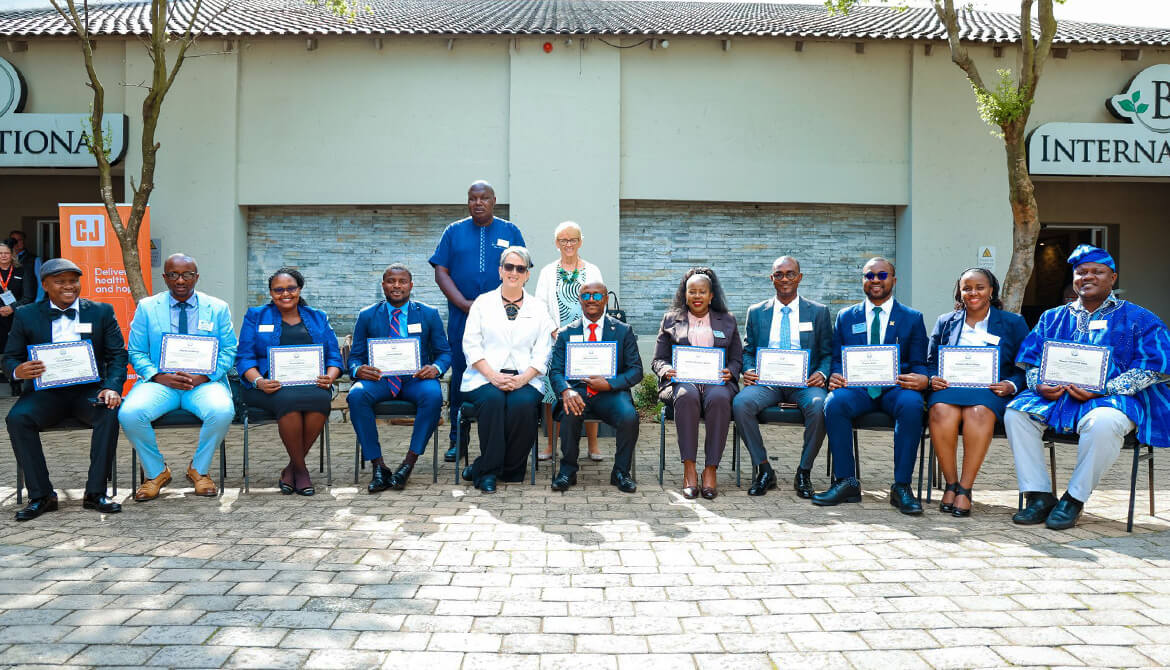
Not long ago, I took my fifth trip to Africa to support the credit union movement. I had the privilege once again of serving as a mentor for the African Development Educators (ADE) program hosted by the African Confederation of Cooperative Savings and Credit Associations (ACCOSCA). It was an experience that will stay with me for a long time—not only because of the remarkable people I met, but because of how powerfully they believe in the cooperative movement.
The ADE Class of 2026 was historic, bringing together 60 graduates from 13 countries as the largest graduating cohort since the program began in 2014. That milestone deserves celebrating, as does the continued leadership of ACCOSCA in developing cooperative leaders across Africa and beyond. And it's inspiring because it's one of several examples of how the Global DE program is shaping credit union professionals everywhere.
The Worldwide Foundation for Credit Unions, together with DE programs around the world, like that in the U.S., help leaders see the credit union model through a wider lens—one that connects local action to global impact. These programs remind us that “people helping people” is not just a slogan; it’s a strategy for strengthening communities—and our industry—around the world.
When Global Challenges Become Local Commitments
In that regard, what struck me most while in Johannesburg was how familiar the conversations felt to those I’ve heard in North America.
Across countries, cultures, and systems, leaders were talking about very real challenges in their communities: fair and affordable housing, economic opportunity, diversity and inclusion, financial freedom, access to natural resources, and long-term stability for families. In global development language, these are often described as “development issues.” In credit unions, they’re usually called something more relatable: member problems.
That distinction matters.
The United Nations Sustainable Development Goals provide a global framework for addressing some of the world’s most urgent challenges, from poverty and inequality to clean water, decent work, and sustainable communities. These goals can feel enormous, as if they belong only to governments, international organizations, or large-scale policy efforts.
And yet, in community after community, credit unions are already doing the work.
The World's Goals, Seen Through a Member's Eyes
When a credit union helps a family secure safe, affordable housing, it is contributing to stronger, more sustainable communities. When a credit union creates pathways for women to access capital, build businesses, and grow as leaders, it is advancing gender equality and economic participation. When a cooperative supports local infrastructure, agricultural development, education, or financial resilience, it is helping solve the very challenges the Sustainable Development Goals were created to address.
Credit unions may not always use the language of global development, but the connection is clear.
The work at credit unions everywhere begins with listening. A member has a need. A community has a gap. A leader sees a barrier that is keeping people from moving forward. Then the credit union does what credit unions have always done best: it creates products, provides services, and organizes people, resources, and trust around a shared purpose.
Listening is Where Transformation Begins
What became clear to me in Johannesburg is that none of this happens by accident. It requires a different kind of leadership than we sometimes celebrate in our industry. The leaders making the greatest impact are not simply operational experts; they are skilled listeners, systems thinkers, and bridge builders. They possess the ability to connect individual member needs to larger societal challenges and then mobilize others around practical solutions.
Increasingly, the leadership practices our movement requires are curiosity, empathy, collaboration, cultural intelligence, and long-term thinking. Solving member problems in today's environment demands leaders who can work across boundaries, convene diverse perspectives, and inspire collective action. In many ways, development education is leadership education because it teaches us to see beyond our institutions and recognize our role as catalysts for community change.
That is the genius of the cooperative model. It does not start with a product; it starts with people. It asks what is needed, what is possible, and demonstrates how collective action creates a better outcome than any one person or organization could create alone.
Leadership Speaks Every Language
While I was there, I also had the opportunity to ask several leaders to share the best leadership advice they have ever received. Their answers were personal, practical, and powerful. They came from different locations, different experiences, and different points of view, but the message was unmistakable: Leadership speaks every language.
What struck me was that their advice was remarkably consistent regardless of geography. Great leaders create trust before they create solutions. They ask better questions before offering answers. They remain grounded in purpose while adapting to changing circumstances. These are not uniquely African leadership lessons, nor are they uniquely North American ones. They are human leadership practices that will define the future success of our movement.
You’ll see the videos of these leaders on LinkedIn, and I hope you’ll watch them with the same sense of possibility I felt while recording them. Because each story points to something deeply true about this movement: Leadership is not confined by geography, just like purpose is not limited by language, and the desire to serve, strengthen, and uplift communities is something we recognize in one another, no matter where we are in the world.
Carrying the Work Forward
That spirit will also continue this July, when I join credit union leaders from around the world at the World Credit Union Conference in Sydney, Australia, where I’ll be leading a session on protecting leadership continuity in times of transition. It’s a timely topic, as the future of our movement depends not only on the problems we solve today, but on whether we’re intentionally developing leaders who can listen deeply, think systemically, and carry this work forward tomorrow.
I’m also looking forward to mentoring individuals with the Canada Development Educators program this September. The program is actively recruiting its next cohort of leaders; for anyone considering the experience, I can say this: Development Education changes the way you see the credit union movement. It expands your understanding of what our work makes possible and deepens your responsibility to lead with purpose.
The Quiet Work of Changing the World
Bringing it all full circle, through all the development opportunities available across the globe, perhaps the idea is not as lofty as it first sounds: Credit unions are saving the world.
They are doing it by helping one family find stable housing. One woman build financial independence. One community create opportunity. One leader choose a more inclusive, cooperative path forward.
When credit unions solve member problems, they are doing more than improving individual lives. They’re advancing human dignity, economic resilience, and shared prosperity.
And in that work, we’re helping build the world we all hope to see.
Heather McKissick, I-CUDE, is CEO of CUES. Her 30-year not-for-profit career encompasses six different industry sectors. She is a former EVP at University Federal Credit Union, Austin, Texas, where she served for nine years. Prior to that, she was CEO of Leadership Austin (https://leadershipaustin.org/), an organization dedicated to developing community and civic leaders across Central Texas. McKissick is the previous director of organizational development at one of the largest non-profit healthcare systems in the US and was an administrator and faculty member at St. Edward’s University.
