




7 minutes
A common trap many leaders fall into is the assumption that your organization has to solve every challenge on its own.
You believe you need to develop the expertise, build the program, find the people, create the solution...and then do it all again when the next challenge arrives.
But credit unions were never designed to operate that way.
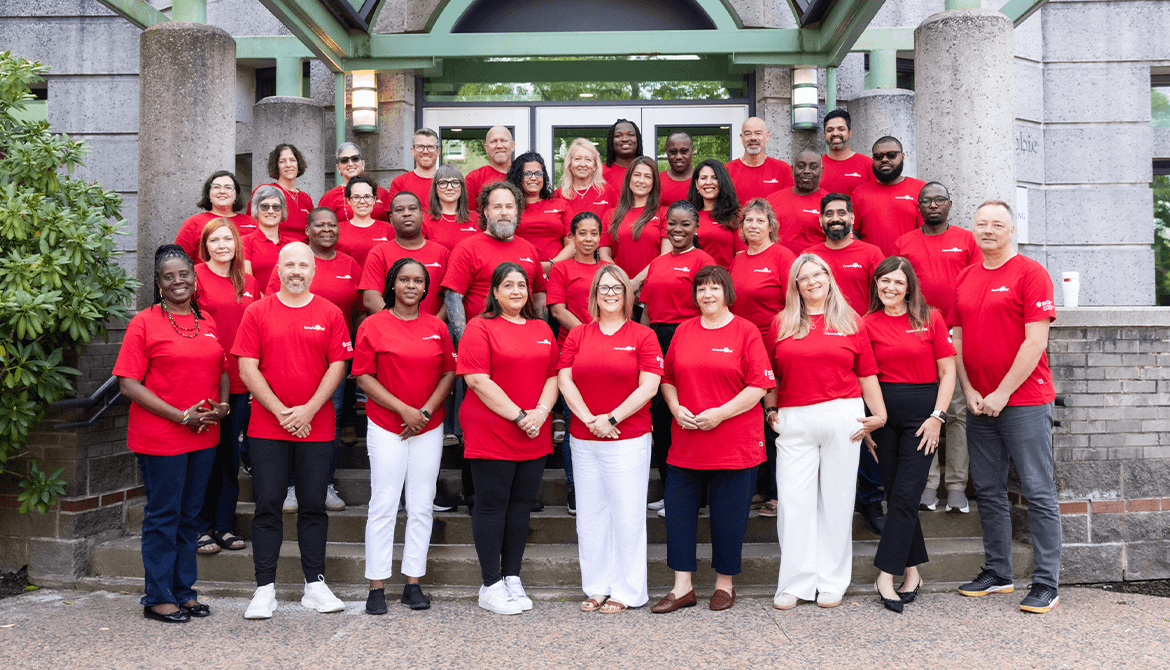
That point was never more apparent than during my recent travels to Halifax, Nova Scotia, where I had the opportunity to serve as a mentor for Canada Development Education (CanadaDE) at Saint Mary’s University. Like other DE programs, CanadaDE brought together people from across the credit union system—board members, CEOs, executives, and leaders at different stages in their careers—to explore the cooperative model and what it means for the work we do today.
And one idea kept rising to the surface: Our network is much bigger than we sometimes allow ourselves to see.
A Principle Worth Looking at Again
If you haven’t thought about the Credit Union Cooperative Principles recently, stay with me.
Principle 6—Cooperation Among Cooperatives—says that cooperatives serve their members most effectively and strengthen the cooperative movement by working together through local, national, regional, and international structures.
Leaders often translate that into something fairly straightforward: Credit unions should help other credit unions. Share an idea, make an introduction, partner on a project. All of that is true, and it matters. But Principle 6 invites us to think bigger.
There is a difference between occasionally collaborating and deliberately building relationships that create shared capacity over time. At its fullest, cooperation is about bringing together resources, expertise, reach, and ideas so organizations can accomplish something that would be harder to achieve independently.
That is where Principle 6 starts to feel less like cooperative philosophy and more like business strategy. Because cooperation can create access to expertise you don’t have, scale you couldn’t achieve on your own, stronger negotiating power, shared infrastructure, new knowledge, and services that may not make sense for one organization to build alone.
In other words, cooperation isn’t simply something we do because it reflects our values. Done well, it can make every organization involved more capable.
Expand the Circle
For many credit union leaders, “cooperation among cooperatives” naturally means credit union with credit union.
But my experience during CanadaDE showed just how much wider that circle can be.
The cooperative economy includes organizations operating in financial services, insurance, agriculture, housing, retail, health care, education, community development, and many other sectors. Principle 6 encourages cooperation not only within a particular sector, but across the broader cooperative ecosystem.
That poses a much more interesting consideration: Who else could help credit unions solve this?
Consider the challenges sitting on credit union leadership agendas right now. "How do we strengthen communities experiencing economic pressure? Attract and develop talent? Improve financial well-being? Adapt to changing technology without losing the human relationships that differentiate us? Reach people and communities whose needs aren’t being fully met?"
Your best potential partner may be another credit union. But it might also be a cooperative insurer. An agricultural or housing cooperative. A federation or network connecting organizations across the cooperative economy. And, where common challenges and goals align, there may also be opportunities to work alongside nonprofits, community organizations, and others operating in the broader social economy.
The point isn’t partnership for partnership’s sake. It’s recognizing that the answer to a challenge may already exist somewhere else in the network.
Maybe Principle 6 isn’t simply reminding us to cooperate because cooperation is part of the credit union system's heritage. Maybe it's reminding us not to leave capacity on the table.
Cooperation Requires Reciprocity
There is another piece of Principle 6 that I think matters for leaders: reciprocity.
Strong cooperative relationships aren’t purely transactional. Sometimes your organization is the one bringing the expertise, resources, connections, or reach. At other times, you're benefiting from what someone else has built.
That exchange may not happen evenly in every moment; the value is created over time.
It requires leaders to approach relationships differently. Instead of asking only, “What can this partnership do for us?” we can also ask, “What can we contribute?” and “What could become possible if we invested in this relationship beyond the immediate need?”
That mindset feels particularly relevant at a time when every organization is being asked to move faster, stretch resources further, and develop capabilities that are increasingly difficult to build alone.
Leadership Beyond Your Own Organization
There was something particularly fitting about exploring these ideas in a DE environment.
People come into the program with different roles, experiences, and perspectives, but they’re asked to look beyond the day-to-day needs of their own organizations and think more broadly about the cooperative system they’re a part of. That alone creates opportunities to learn from people who may see the same challenge through an entirely different lens.
Leadership development is often framed around the individual: How do I communicate better? Make stronger decisions? Become more strategic? Prepare for my next role?
Of course, those things matter. But leadership in a cooperative movement requires the ability to look beyond the boundaries of your own organization. To see systems, relationships, shared interests, and possibilities. To recognize where others have strengths you don’t. And to understand that making your own organization stronger and strengthening the network around it do not have to be competing goals.
That idea is also embedded in the guidance behind Principle 6, which asks leaders to think at a broader movement level—not only about the needs of their individual organizations. That connection felt especially meaningful in a program like CanadaDE, where people from different parts of the credit union system are challenged to think more expansively about the cooperative model and their place within it.
As a mentor, my role was to ask questions, offer perspective, and help participants think through what they were learning and what they might do with it when they returned home. And, as often happens when you agree to mentor others, I ended up learning quite a bit, too.
We'll soon also be sharing a video featuring several of the individuals I met through CanadaDE reflecting on leadership and the ideas shaping how they approach it. Watch for it on LinkedIn. Their perspectives are a good reminder of what becomes possible when people with different experiences look beyond traditional boundaries and think more broadly about leadership—and cooperation.
Ask a Bigger Question
For U.S. credit union leaders, I think there is an opportunity here.
The next time your leadership team confronts a challenge or identifies an opportunity, don’t stop at asking, "How should our credit union address this?" Take it even further by asking: "Who else shares this need? Who already understands this problem? Who has capabilities we don’t have? What could we contribute? And what could we accomplish together that would be harder to accomplish alone?"
Look within the credit union movement, certainly. Then widen the lens.
Principle 6 doesn’t suggest that our organizations are incapable of succeeding independently. Credit unions prove every day that they can. It actually reframes the perspective by asking, "How much more could we accomplish if we stopped assuming we had to?"
That may be the lesson I emphasize the most from my experience with CanadaDE. Cooperation isn’t simply part of the credit union history or a principle we inherited; it's capacity waiting to be used. And our network may be much bigger than we think.
Heather McKissick, I-CUDE, is CEO of CUES. Her 30-year not-for-profit career encompasses six different industry sectors. She is a former EVP at University Federal Credit Union, Austin, Texas, where she served for nine years. Prior to that, she was CEO of Leadership Austin, an organization dedicated to developing community and civic leaders across Central Texas. McKissick is the previous director of organizational development at one of the largest non-profit healthcare systems in the US and was an administrator and faculty member at St. Edward’s University.
