



3 minutes
How Credit Union Leaders Can Stay Ahead Through Advocacy
In today’s rapidly shifting regulatory environment, effective leadership requires more than operational expertise—it calls for strategic advocacy.
As credit unions prepare for significant developments at the Consumer Financial Protection Bureau (CFPB) and NCUA, leaders are increasingly focused on how to navigate change without compromising their mission of service. This balancing act has become especially important for credit unions serving America’s communities and families, not to mention military and veteran members, where stakes for financial readiness are uniquely high and vulnerable.
DCUC is helping credit unions meet this moment by maintaining active, ongoing dialogue with regulators to ensure new and emerging rules remain proportionate, risk-appropriate, and mission-driven.
With major NCUA rulemaking expected in early 2026, DCUC is already preparing public comments that will elevate the operational realities of all credit unions and their members’ perspectives, especially small, overseas, and installation-serving institutions that face disproportionate compliance burdens.
Beyond monitoring regulation, navigating change also means advocating for opportunities that strengthen the safety nets credit unions rely on. In many National Defense Authorization Act (NDAA) legislative cycles, DCUC has led the credit union industry by championing provisions to both protect and support credit unions’ abilities to serve our defense communities. DCUC also had a strong hand in engaging and advocating for support of the Central Liquidity Facility (CLF), enhancing CDFI resources, and advancing the Veterans Member Business Loan Act (VMBLA). These measures would expand financial access for servicemembers, preserve installation access, and prevent banks from taking advantage of vulnerable military communities through DoD waiver processes. Supporting these proposals is essential to improving financial readiness across the Armed Forces.
Of course, change doesn’t always come in the form of progress.
Harmful provisions like the Durbin–Marshall Credit Card Competition Act (CCCA) continue to resurface, which would unequivocally weaken credit unions’ ability to serve high-need communities. DCUC has historically led the industry's efforts to block these proposals, educating House and Senate Armed Services Committees, Financial Services and Banking Committees, and Small Business Committees on the real-world consequences these amendments would impose. With the recent reintroduction of this bill and efforts to attach it to nongermane legislation, strong leadership and unified advocacy is more essential than ever.
As the regulatory landscape evolves, so must our ability to respond. DCUC is modernizing its outreach by expanding regional sub-councils, hosting more targeted leadership gatherings, improving real-time communication during legislative developments, and equipping credit union teams with resources that scale to their unique needs.
Navigating change isn’t optional, it’s strategic and necessary. With the right partnerships and advocacy, credit unions can remain agile, mission-focused, and ready to serve the families who rely on them most.
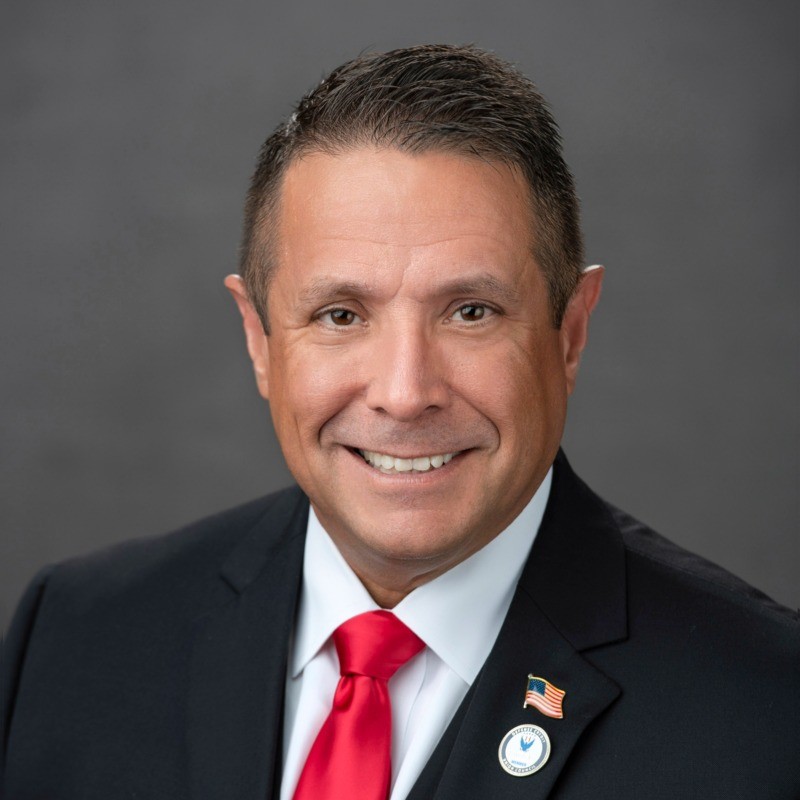
Anthony Hernandez, Defense Credit Union Council (DCUC) President and CEO, leads the nation’s only trade association exclusively representing credit unions serving military and veteran communities worldwide, encompassing more than 40 million members. He joined DCUC as Chief Operating Officer in August 2016 and was appointed CEO in April 2017. In his role, Hernandez oversees DCUC’s operations and strategic growth and works closely with the Department of Defense on issues impacting credit unions and the financial well-being of servicemembers, veterans, and their families. His leadership has included rebranding DCUC as an independent trade association, establishing a Military Advocacy Committee, expanding financial education initiatives, advancing legislative and regulatory advocacy, increasing revenue, and spearheading DCUC's strategic plans.
Prior to DCUC, Hernandez served 25 years in the U.S. Air Force, retiring as a Colonel after holding senior command and financial leadership roles. He served as Chief Financial Officer for Air Mobility Command, managing a $20 billion annual budget and reducing operating expenses by more than $900 million annually, and held multiple command and Pentagon assignments, including Executive Officer to the Commander of Air Combat Command. Hernandez holds a Bachelor of Business Administration from New Mexico State University and master’s degrees in organizational management, military operational art and science, and strategic studies.
