





7 minutes
A few months ago, after spending time with credit union system leaders during my fifth visit to Africa, I came home with a thought that probably sounded a little ambitious: credit unions are saving the world, one member issue at a time.
I still believe it.
What I saw in Africa was a reminder that some of the enormous challenges we talk about globally are also experienced very locally. Economic opportunity, financial inclusion, education, community resilience, and access to resources become the problems of an individual, a family, or a neighborhood. Around the world, credit unions and financial cooperatives step into those spaces every day and help people find a way forward.
My recent trip to Sydney, Australia, for the World Credit Union Conference gave me a new perspective on that same idea. If credit unions are solving consequential problems in communities around the world, then we should pay equally close attention to the leadership that makes that work possible.
More than 2,400 credit union system and financial cooperative leaders from 39 countries gathered in Sydney. We came from different markets, regulatory environments, cultures, communities, and organizational structures. Yet as I moved through conversations during the week, I was struck by how often individuals were wrestling with variations of the same leadership questions.
How do we prepare our organizations for changes we can't fully predict? How do we embrace technology while keeping people and purpose at the center? How do we develop new leaders while protecting critical knowledge and relationships? How do we evolve quickly enough to remain relevant without losing what makes cooperative finance distinctive?
Somewhere along the way, a phrase kept coming to mind: Leadership speaks every language.
The Skills Travel
The session I led in Sydney focused on leadership continuity. I have been encouraging credit union leaders to think beyond traditional succession planning because replacing a person in a role tells us only part of the story. Organizations also need to understand where influence, decision authority, institutional knowledge, relationships, and credibility reside and what happens when any of those become too concentrated.
You can see this dynamic in almost any organization if you look closely enough. Sometimes the greatest continuity risk is attached to a title. Other times, it lives in a relationship that took years to build or in the institutional knowledge everyone assumes someone will always be there to provide. The leadership challenge is recognizing those dependencies early enough to develop others, distribute knowledge, build relationships more broadly, and create an organization that can continue moving through transition. What fascinated me in Sydney was how readily that idea translated across borders. Leaders operating in very different environments understood the issue because the underlying leadership work was familiar.
It requires visioning to anticipate what the organization may need next. It requires relationship building and coaching to intentionally expand leadership capacity. It also requires self-awareness, particularly for senior leaders, to recognize when too much authority, knowledge, or influence has accumulated around us.
Those are skills we can develop. And Sydney reminded me why having a shared language for them matters.
The challenges facing two credit unions may look completely different on the surface, but the leadership capabilities they draw upon to solve them often have much more in common.
New Technology Is Raising Old Leadership Questions
I encountered a similar lesson during a panel discussion hosted by AWS on artificial intelligence with Mike Currie, CEO of MOVE Bank, and Bernadette Stone, CIO of Great Southern Bank. We were there to talk about AI, data, innovation, personalization, and the future of financial services, and certainly we covered all those things.
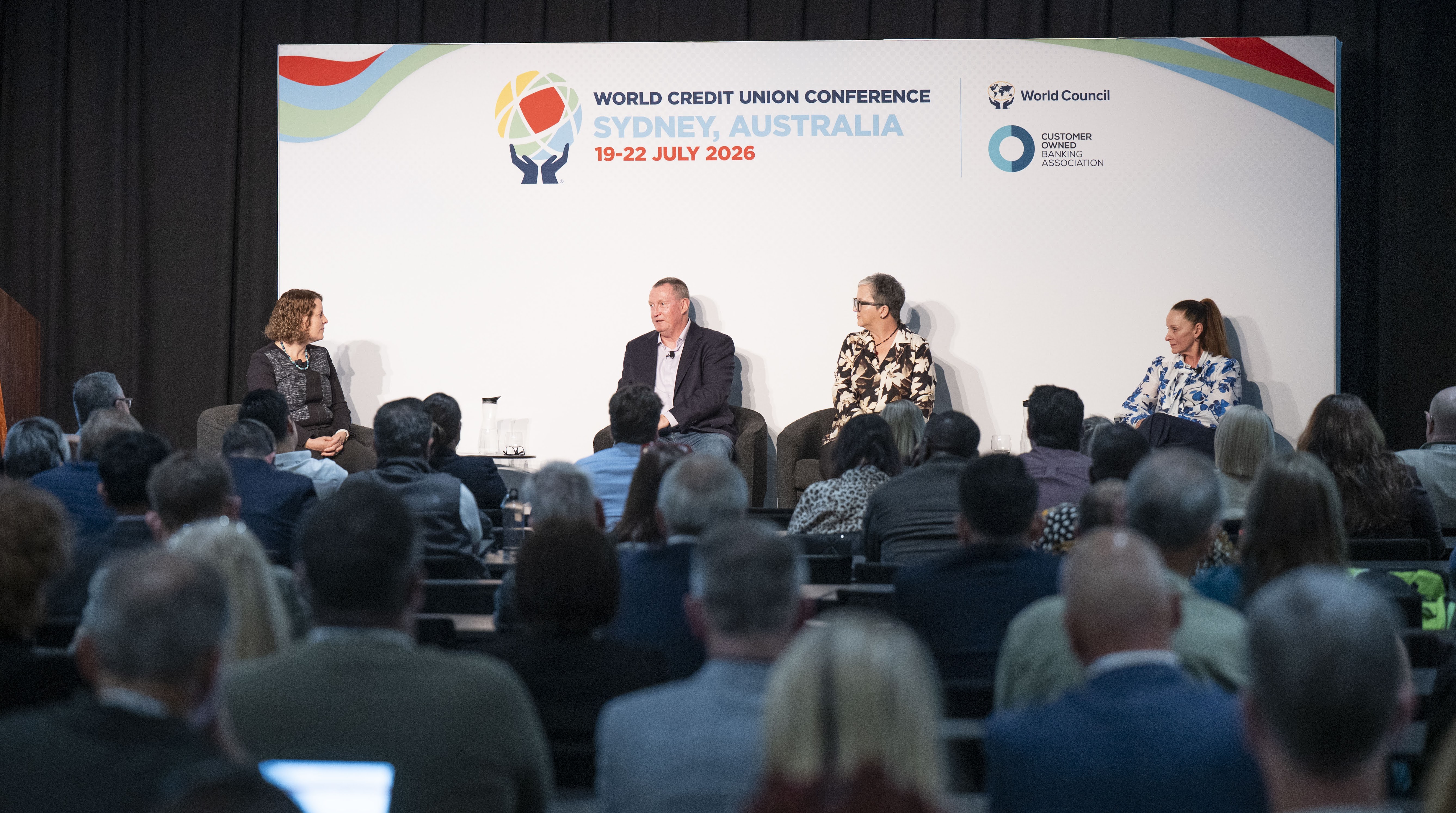
Yet the longer we talked, the more the conversation returned to fundamentally human questions. What problems are credit unions trying to solve for the members? How do leaders decide where experimentation makes sense? How do we help employees adapt as their work changes? How do we create enough organizational readiness to move at the pace technology now demands?
These questions are especially relevant because the pace of change can tempt us to focus on the newest tool rather than the leadership environment surrounding it. Technology can help us make faster decisions, personalize experiences, identify patterns, and eliminate friction. Realizing that potential still depends on people exercising judgment, challenging assumptions, managing risk, communicating clearly, and keeping the member at the center of the decision.
Leadership matters now more than ever because the decisions in front of credit unions are becoming more interconnected and consequential. Leaders increasingly must understand enough about technology, talent, risk, culture, strategy, and member expectations to see where those issues intersect. No single leader can be the expert in all of them, which makes curiosity, collaboration, and the ability to draw out the expertise of others even more important.
Leadership Becomes Real Through Stories
That is also why I wanted to use my time in Sydney to capture new leadership advice from individuals across the global credit union movement.
We spend a great deal of time at CUES studying leadership, defining competencies, and developing leaders. Yet some of my favorite moments happen when I simply ask an accomplished leader what they have learned.
The answers are rarely theoretical. They come from experience: a mentor who changed how someone thought about their responsibility as a leader, a decision that did not work out as planned, the resilience required to navigate a difficult transition, or the realization that developing other people is part of the job.
Those stories give leadership competencies texture. A concept like relationship building becomes much more useful when you hear how a leader invested in a relationship years before needing to rely on it. Adaptability means something different when someone can tell you about the moment an old approach stopped working. Coaching becomes tangible when a leader describes the person who saw potential in them and gave them room to grow.
During those conversations in Sydney, I heard experiences shaped by different places, institutions, and career journeys, but I kept recognizing the leadership principles underneath them: listen, stay curious, develop people, build trust, know what you stand for, be willing to change, and learn from others.
Keep an eye on LinkedIn for a video bringing together leadership advice from these global leaders. Their stories offer far more than good quotes; taken together, they are another compelling reminder that leadership speaks every language.
Connection Is Part of the Work
The other thing I carried home from Sydney was a renewed appreciation for connection itself as a leadership practice.
There is tremendous value in putting leaders from 39 countries in the same place and giving them opportunities to compare experiences. Someone may be approaching a familiar problem from a completely different regulatory, cultural, or economic context, and that difference can expose assumptions you did not realize you were making. Another leader may already have tried something you are considering and can tell you what they learned.
For credit unions, this kind of exchange has another significance. Cooperation is already embedded in who we are. Sharing what works, opening relationships, and helping another cooperative institution succeed strengthens a movement whose collective reach is far greater than any individual organization.
That brings me back to Johannesburg.
If credit unions really are helping save the world one member issue at a time, none of us can know in advance exactly what the next member issue will be. The needs will evolve. Technology will change. New risks will emerge. Communities will face challenges we cannot yet see.
Our job as leaders is to make sure our organizations remain capable of responding. That means developing people who can make sound decisions in unfamiliar circumstances, building cultures that can adapt without losing their identity, creating relationships strong enough to carry us through uncertainty, and staying curious enough to learn from someone whose experience looks very different from our own.
After Johannesburg, I came home inspired by what credit unions are doing around the world. After Sydney, I came home equally energized by who is leading them.
I saw a global movement filled with people willing to ask questions, exchange ideas, learn from one another, and keep developing the skills necessary to serve their members through whatever comes next. For all the uncertainty surrounding financial services today, that gives me tremendous confidence in our future.
Thirty-nine countries gathered in Sydney, each bringing its own challenges, opportunities, and perspective. What connected us was bigger than geography.
We share a cooperative mission. And we have leaders around the world building the capacity to carry that mission forward.
Heather McKissick, I-CUDE, is CEO of CUES. Her 30-year not-for-profit career encompasses six different industry sectors. She is a former EVP at University Federal Credit Union, Austin, Texas, where she served for nine years. Prior to that, she was CEO of Leadership Austin (https://leadershipaustin.org/), an organization dedicated to developing community and civic leaders across Central Texas. McKissick is the previous director of organizational development at one of the largest non-profit healthcare systems in the US and was an administrator and faculty member at St. Edward’s University.
